
Many buyers describe kraft paper bowls as brown paper bowls, but that is only the visible part. In real production, a kraft paper bowl is a structured food-contact package made from paperboard, a barrier coating[1], heat-sealed side and bottom joints, and sometimes custom printing ink. Each layer affects leakage, stiffness, heat resistance, food safety and delivery stability.
Conclusion: Kraft paper bowls are usually made of food-grade kraft paperboard plus an inner food-contact coating such as PE, PLA, PP or a water-based barrier. The right structure depends on the food type, serving temperature, holding time, disposal route and compliance requirements. For B2B buyers, the key is not only asking what are kraft paper bowls made of, but also confirming paper grade, GSM, coating type, sealing quality, ink safety and supplier quality control.
As a sales director working with overseas foodservice and distribution customers, I often suggest evaluating kraft paper bowl material as a system, not as one single material name.
Kraft Paper Bowls Are More Than Brown Paper: Paperboard, Fiber, GSM, and Stiffness
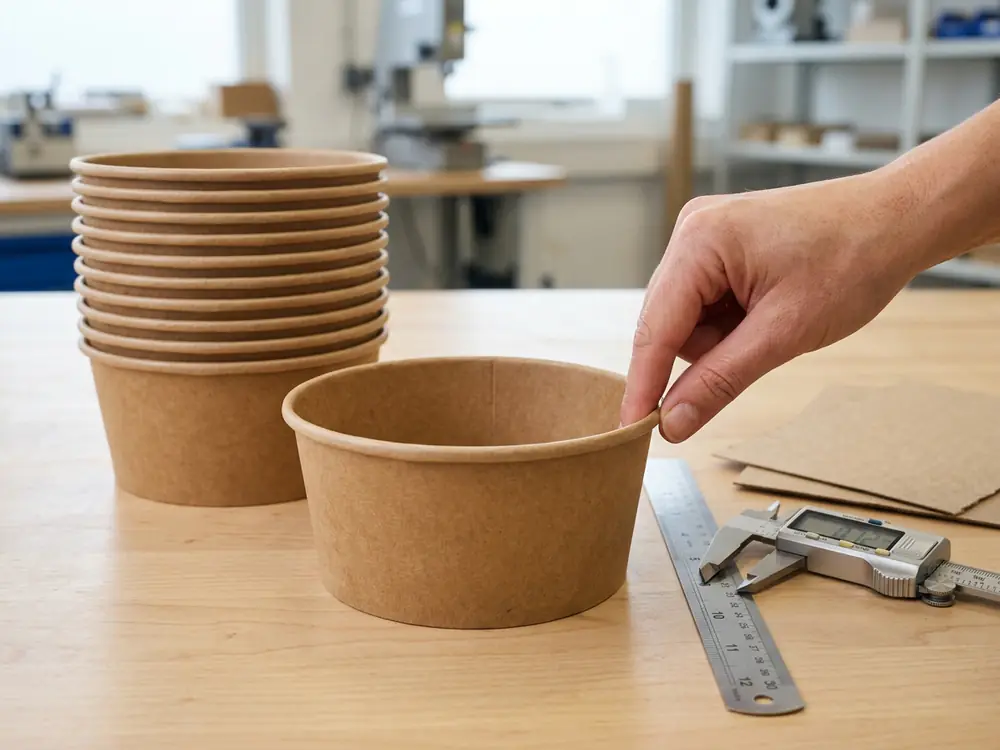
The main body of a kraft paper bowl is food packaging grade paperboard[2], not ordinary thin paper. This paperboard provides wall rigidity, compression resistance, rim strength, stacking stability and resistance to deformation during filling, transport and takeaway use.
Fiber quality matters because two bowls with the same GSM can perform differently. Virgin fiber, fiber length, fiber bonding, paper formation and moisture consistency all influence stiffness. Good paperboard gives the forming machine a wider heat-sealing window and helps the bowl keep its shape when filled with salad, noodles, rice, soup or oily meals.
GSM, or grams per square meter, indicates paper weight. Econly can work with paper in an approximate 150-350 gsm range, depending on the product structure and application. This does not mean every bowl should use the full range. Lower GSM may reduce material and freight cost. Higher GSM usually improves rigidity and load-bearing performance. However, increasing GSM too much can add cost without a proportional performance benefit if the coating, bottom design or forming accuracy is weak.
Raw paper consistency is also a supply chain issue. Econly sources food-grade base paper from reputable Chinese suppliers such as Wuxing and Sun Paper and keeps about 4,000-6,000 tons of regular paper stock. For large B2B orders, stable paper supply supports batch consistency, predictable stiffness, stable heat sealing and better delivery planning during seasonal peaks.
- What paperboard grade is used for the wall and bottom?
- Is the paper made mainly from virgin fiber?
- What GSM is used before and after coating?
- Can the supplier provide paper specifications and batch records?
- Has the same structure been tested with your target food?
The Core Food-Contact Layer: When to Use PE, PLA, PP or Water-Based Coatings

The coating is the layer that makes coated paper bowls resist water, oil and heat[3]. Without a barrier layer, paperboard would absorb moisture, soften and leak. The best coating is not the one with the strongest marketing label; it is the one that matches the food and end-of-life requirement.
| Coating Type | Main Strength | Typical Fit | Buyer Caution |
|---|---|---|---|
| PE | Stable water and oil resistance, cost-effective | Cold foods, salads, rice bowls, general takeaway | Not ideal for high-temperature microwave use; recycling depends on local facilities |
| PLA | Bio-based and compostability-oriented under suitable conditions | Brands with compostable packaging programs, cold to warm food | Compostability depends on industrial systems and certification scope |
| PP | Better heat resistance and microwave suitability[5] | Hot soup, oily food, short reheating, high-temperature applications | Confirm microwave testing, lid compatibility and regional compliance |
| Water-based barrier[4] | Designed to improve recyclability or compostability routes | Sustainability-focused foodservice programs | Performance varies by formula, food oil level and holding time |
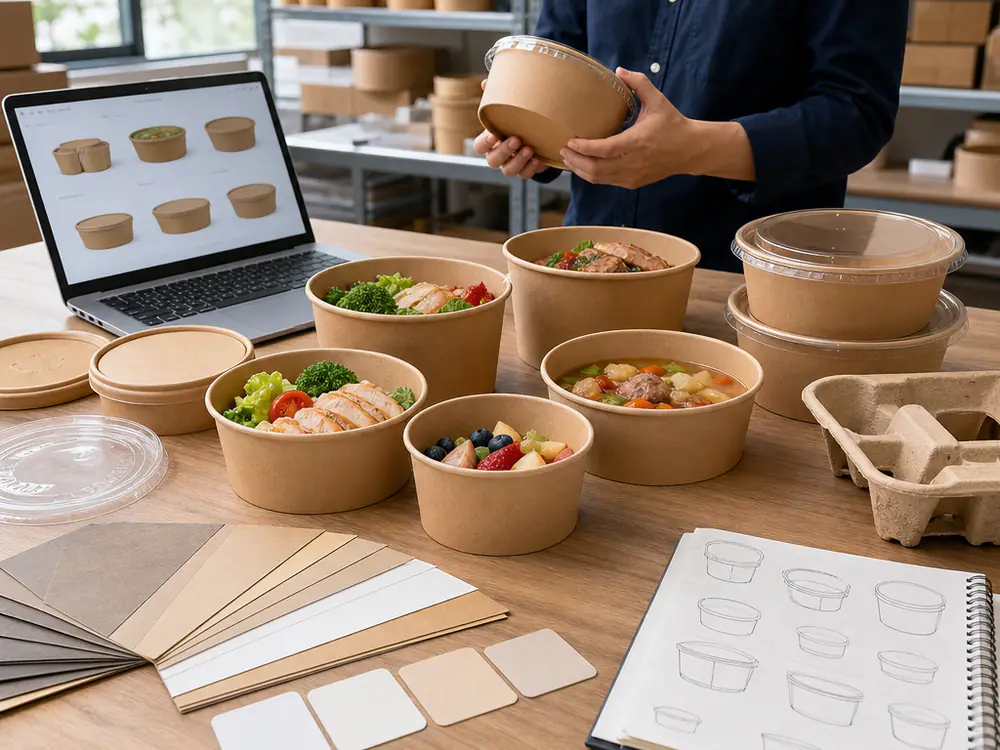
Food type should guide the specification. A cold salad bowl does not need the same structure as a hot soup cup. Oily curry, long-hold noodles, short-time microwave reheating and chilled meal kits all create different stress on the coating. Buyers should share food temperature, filling weight, holding time, distribution method and disposal expectation before confirming the structure.
Econly provides PE, PLA, PP and water-based coating options. In practice, we compare performance, compliance, cost and local disposal infrastructure before recommending a coated paper bowl structure.
Side Seams, Bottom Seals and Printing Inks: How Hidden Structures Affect Leakage, Safety and Branding

Material alone does not make a reliable paper bowl. The same paperboard and coating can perform differently on different forming machines because side seam pressure, heating temperature, bottom folding and rim forming all affect leak resistance.
The side seam is where the paperboard wall is sealed into a cylinder. If the temperature is too low, the coating may not bond well. If it is too high, the paper or coating can be damaged. The bottom seal is even more critical for hot liquid, because weight, heat and movement concentrate stress at the base. This is why high-speed forming equipment, process control and operator experience matter in mass production.
Printing also belongs in the food packaging safety review. Custom printed kraft paper bowls usually place ink on the outside, but buyers should still consider odor, rub resistance, drying control and possible migration risk. Food-grade inks, suitable adhesives and controlled printing areas help protect both the food and the brand experience.
For branded packaging, visual quality is only one part of the approval. A good pre-production sample review should check color, barcode readability, rim shape, lid fit, stacking, smell, leakage and filling performance.
How to Set Compliance and Procurement Standards for Food Grade Paper Bowls

Food grade paper bowls should be assessed as complete food-contact articles. Compliance is not limited to base paper. It includes coating materials, inks, adhesives, processing aids and possible migrants created during manufacturing.
For the U.S. market, buyers commonly review whether food-contact substances are suitable for the intended use conditions[6]. For the EU market, buyers should consider general food-contact material requirements, migration[7], sensory impact[8] and any market-specific expectations. The exact documents depend on destination market, food type and contact conditions.
A practical procurement checklist should include:
- Material declaration for paperboard, coating, ink and adhesive.
- Food-contact test reports for the target market and food category.
- Specification sheet showing GSM, coating type, size and tolerance.
- Quality control plan for leakage, forming, printing and packing.
- Sample approval process before mass production.
- Batch traceability and complaint-handling procedure.
Econly operates coating, six-color printing, die-cutting, cup and bowl forming, food box and paper bag production lines. Certifications including BPI, BRC, FSC and ISO9001, together with 20 dedicated quality control specialists, support consistent production for global wholesalers, distributors, brand owners and chain restaurants. For buyers, this kind of manufacturing base reduces communication cost and helps control delivery risk across repeated orders.
FAQ: Common Material Questions When Buying Kraft Paper Bowls
Q: What are kraft paper bowls made from?
A: They are usually made from food-grade kraft paperboard, an inner barrier coating, heat-sealed side and bottom structures, and sometimes outer printing ink. The coating may be PE, PLA, PP or water-based, depending on food use and sustainability goals.
Q: Are kraft paper bowls made from recycled paper?
A: Not always. Many food grade paper bowls use virgin fiber paperboard for strength, cleanliness and food-contact control. Some structures may include recycled fiber if allowed by the application and market requirements, but buyers should confirm material declarations and test reports.
Q: Why do kraft paper bowls need a coating?
A: Paperboard naturally absorbs water and oil. A coating creates a food-contact barrier that helps prevent leaking, softening and grease penetration. The correct coating depends on whether the bowl holds cold salad, hot soup, oily food or reheated meals.
Q: Are PE-coated kraft paper bowls food-safe?
A: PE-coated bowls can be food-safe when the PE, paperboard, inks and finished article meet the relevant food-contact requirements for the target market and use condition. Buyers should request test documents instead of relying only on the material name.
Q: Are kraft paper bowls microwave-safe?
A: Only if the finished bowl is designed and tested for microwave use. PP-coated structures are often more suitable for higher heat applications, while PE and some PLA structures may have limits. Always confirm coating type, test conditions and lid compatibility.
Final takeaway: The best kraft paper bowl specification balances paperboard stiffness, coating performance, sealing structure, printing safety, compliance documents and supply stability. Before placing a bulk order, prepare your food application, temperature range, artwork, destination market and expected disposal route, then request samples and a material recommendation based on those conditions.
References and Notes
- Bioleader - What Are Paper Bowls Made Of? Production Process of Disposable Paper Bowls back
- Smurfit WestRock - Coated Natural Kraft (CNK) Paperboard back
- Bioleader - High-Temperature Waterproof and Oil Resistance Testing back
- H.B. Fuller - Water-Based Barrier Coatings back
- GMZ - Are Paper Bowls Microwave Safe? back
- FDA - Food Packaging & Other Substances that Come in Contact with Food back
- Measurlabs - Testing of Paper and Board FCMs in the EU back
- BfR - XXXVI Paper and Board for Food Contact back

Welcome to
the ECONLY Blogs!
Blogs Categories




Online Service

John Pan
Marketing Director

Seven Lee
Sales Manager
What are Econly gonna Do?
1st step: the use of professional knowledge and production capacity to provide quality products;
2nd step: optimize the product pain point, help to solve the customer's terminal sales problems;
3rd step: improve the selection of raw materials and technology level, improve the quality of life of buyers;
4th Step: profit feedback production and society, to create value for the cause of environmental protection.